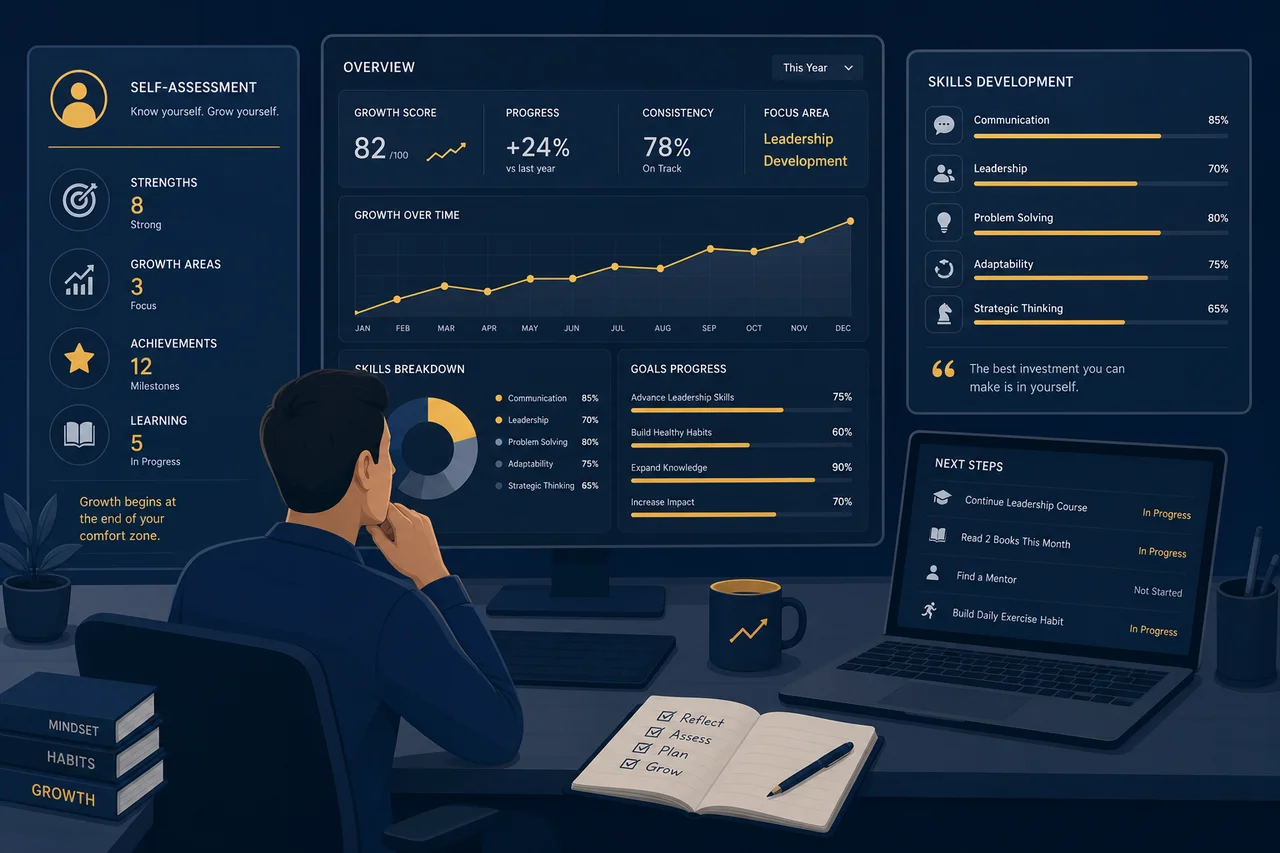
Career Goal Setting Framework That Produces Real Results
Career goal setting framework that produces real results. Values alignment, milestone tracking, and accountability methods.
Anúncios
Career goals that actually drive professional growth share specific characteristics: they connect to measurable outcomes, operate within realistic timelines, and align with your values rather than external expectations. Vague aspirations like get promoted or earn more money lack the structure that transforms intention into achievement.
This framework helps you set career goals that produce tangible results by breaking down the goal-setting process into actionable components with built-in accountability.
Why Most Career Goals Fail Before They Start
Anúncios
Career goals fail when they are too vague, too ambitious, or disconnected from daily actions. I want to be a director someday provides no actionable direction. I will develop the financial acumen and cross-functional leadership experience required for director-level roles within 24 months creates a workable plan.
The gap between aspiration and action is where most career goals die. Bridging this gap requires breaking long-term goals into quarterly milestones with specific deliverables you can execute and measure.
How to Set Goals That Align With Your Actual Values
Anúncios
Start by identifying what matters to you beyond career advancement. Autonomy, financial security, creative expression, impact, and work-life integration are common career values that should inform your goal selection.
- List your top five professional values and rank them honestly
- Evaluate whether your current career trajectory supports or conflicts with these values
- Set goals that advance your career while reinforcing rather than sacrificing your priorities
- Reject goals that sound impressive but conflict with what actually matters to you
- Revisit your values annually because they evolve with life experience and changing circumstances
The Annual, Quarterly, Monthly Goal Framework
Set one to two annual career goals that define your professional direction for the year. Break each annual goal into quarterly milestones with specific deliverables. Further decompose quarterly milestones into monthly action items you can schedule and complete.
This cascading structure connects daily work to long-term aspirations through intermediate steps that feel achievable. Each completed monthly action builds toward the quarterly milestone which advances the annual goal.
Should Career Goals Be Outcome-Based or Process-Based?
Both types serve different purposes. Outcome goals like receive a promotion define the destination. Process goals like complete one professional development course monthly define the journey. Effective goal-setting combines outcome targets with process commitments that make outcomes achievable.
Process goals provide daily motivation because they are within your control. Outcome goals depend partly on external factors. The combination keeps you focused on what you can do while maintaining vision of where you are heading.
Adapting Goals When Circumstances Change
Career goals set in January may not suit your circumstances by June. Organizational changes, industry shifts, personal life developments, and new opportunities all warrant goal reassessment. Adjusting goals based on new information is strategic flexibility, not failure.
Review and adjust goals quarterly. Keep the long-term direction stable while modifying the path based on what you have learned about yourself, your organization, and your industry since the goals were set.
How Accountability Partners Improve Goal Achievement
Share your career goals with one or two trusted professionals who will check on your progress honestly. External accountability increases follow-through rates because the social commitment to someone you respect adds motivation beyond self-discipline alone.
Choose accountability partners who will challenge you when you rationalize falling behind rather than those who will accept any excuse sympathetically. Supportive honesty from accountability partners accelerates goal achievement.
Tracking Progress Without Obsessive Monitoring
Weekly five-minute reviews of progress against current monthly goals provide sufficient tracking without creating monitoring overhead. Monthly reviews assess quarterly milestone progress. Quarterly reviews evaluate annual goal trajectory.
Track leading indicators like skills developed, relationships built, and projects completed rather than lagging indicators like promotion timing or salary increases. Leading indicators confirm you are on the right path before outcome metrics confirm arrival.
What to Do When You Achieve a Major Career Goal
Celebrate genuinely and then set the next goal within two weeks. The period immediately after goal achievement offers heightened motivation and momentum that dissipates quickly without a new direction to channel it toward.
Reflect on what worked during goal pursuit and document the strategies that proved most effective. This meta-learning improves your goal-setting and execution for future professional objectives.
Career Goals at Different Professional Stages
Early career goals should emphasize skill acquisition, network building, and discovering your professional strengths. Mid-career goals shift toward specialization, leadership development, and financial optimization. Late career goals often focus on impact, legacy, and work-life integration.
Matching goal type to career stage prevents the frustration of pursuing advancement-focused goals when what you actually need is foundation-building, or pursuing skill-building goals when your career calls for strategic positioning.
When Goals Become Limiting Rather Than Motivating
Goals that no longer excite you deserve examination. The fact that you committed to a goal does not obligate you to pursue it when your values, interests, or circumstances have changed fundamentally since you set it.
Distinguish between productive discomfort that accompanies challenging growth and genuine misalignment that signals a goal no longer serves your professional development. The former deserves persistence. The latter deserves revision.
Building Goal-Setting Into Your Career Routine
Make annual goal-setting a scheduled event rather than a sporadic activity. Block time during December or January to reflect on the past year and establish the next year's professional direction with the same intentionality you bring to financial planning.
Share your goals with your manager during January conversations to create organizational alignment. When your manager knows your goals, they can provide opportunities, feedback, and support that accelerate achievement.
How many career goals should you pursue simultaneously?
Should career goals be shared publicly?
What if your career goals conflict with your employer's goals for you?
How do you maintain motivation for long-term career goals?
Are career goals different from performance goals?
Career goals that work are specific enough to guide daily decisions, flexible enough to accommodate change, and meaningful enough to sustain motivation through the months and years required to achieve them.