Executive Resume Writing Tips for Senior-Level Positions
Executive resume writing tips for senior positions. Strategic leadership, board experience, and C-suite formatting.
Anúncios
Executive resumes operate under different rules than standard professional resumes. Senior leaders must communicate strategic impact, organizational transformation, and board-level thinking within a format that conveys authority while remaining scannable.
This guide covers the structural, content, and presentation differences that distinguish executive resumes from the standard formats that work at earlier career stages.
How Executive Resumes Differ From Standard Formats
Anúncios
Executive resumes lead with strategic impact rather than tactical accomplishments. P&L responsibility, organizational growth, market expansion, and stakeholder management replace the project-level achievements that mid-career resumes emphasize.
The audience is different too. Executive recruiters and board members evaluate candidates through a strategic lens, looking for leadership narrative rather than skill inventories.
What Should the Executive Summary Section Include?
Anúncios
A four to six line executive summary positions your leadership brand immediately. Include your executive title, years of C-suite or VP experience, industry specialization, and your defining leadership achievement.
Example: Chief Financial Officer with 15 years of experience driving financial strategy for technology companies through IPO, M&A, and hypergrowth phases. Led financial operations scaling from 50M to 500M revenue.
How to Present P&L and Revenue Responsibility
Quantify scope prominently: P&L ownership of $200M across three business units immediately communicates your operating scale. Revenue growth, cost optimization, and margin improvement metrics follow to demonstrate what you did with that responsibility.
- State P&L scope in dollar terms for immediate scale communication
- Include team size managed both directly and through organizational layers
- Highlight board-level interactions, investor relations, and governance experience
- Quantify transformation outcomes: market expansion, digital transformation, or restructuring results
- Include international or multi-site leadership experience if relevant to target roles
Structuring Career History for Executive Impact
Executive resumes can extend to three pages when the content warrants it. Focus detailed achievement bullets on the most recent two to three roles and summarize earlier positions in brief format.
Each role should tell a leadership story: what was the organizational situation when you arrived, what did you change or build, and what measurable results did you deliver? This narrative structure resonates with executive recruiters.
Should Executive Resumes Include Board and Advisory Positions?
Board directorships, advisory roles, and non-profit board service demonstrate governance experience and industry recognition. Include these in a dedicated section that signals your leadership extends beyond single-employer commitments.
Position board experience prominently if your target roles involve governance responsibilities. For operational executive roles, include board experience but subordinate it to operational achievements.
How to Handle a Long Executive Career on Paper
Executives with 25 or more years of experience face the challenge of including relevant history without triggering age-related assumptions. Focus the detailed section on the last 15 years and summarize earlier roles under an Early Career heading.
Remove graduation years from education sections when they reveal age unnecessarily. Your qualifications and achievements speak for themselves without timeline markers that invite bias.
Industry-Specific Executive Resume Expectations
Technology executives emphasize innovation, scaling, and technical vision. Financial services executives highlight regulatory expertise and risk management. Healthcare executives focus on patient outcomes, compliance, and operational efficiency.
Match your resume's vocabulary and emphasis to the industry norms of your target roles. Executive search firms appreciate candidates who demonstrate industry fluency through their written materials.
The Role of Executive Branding Statements
An executive branding statement is a one-line value proposition that headlines your resume. Transformational CFO driving fintech growth through data-driven financial strategy immediately communicates your leadership identity.
This statement appears in your resume header, LinkedIn headline, and networking introductions. Consistency across platforms reinforces your executive brand and improves recognition among search professionals.
Presentation and Design for Executive Resumes
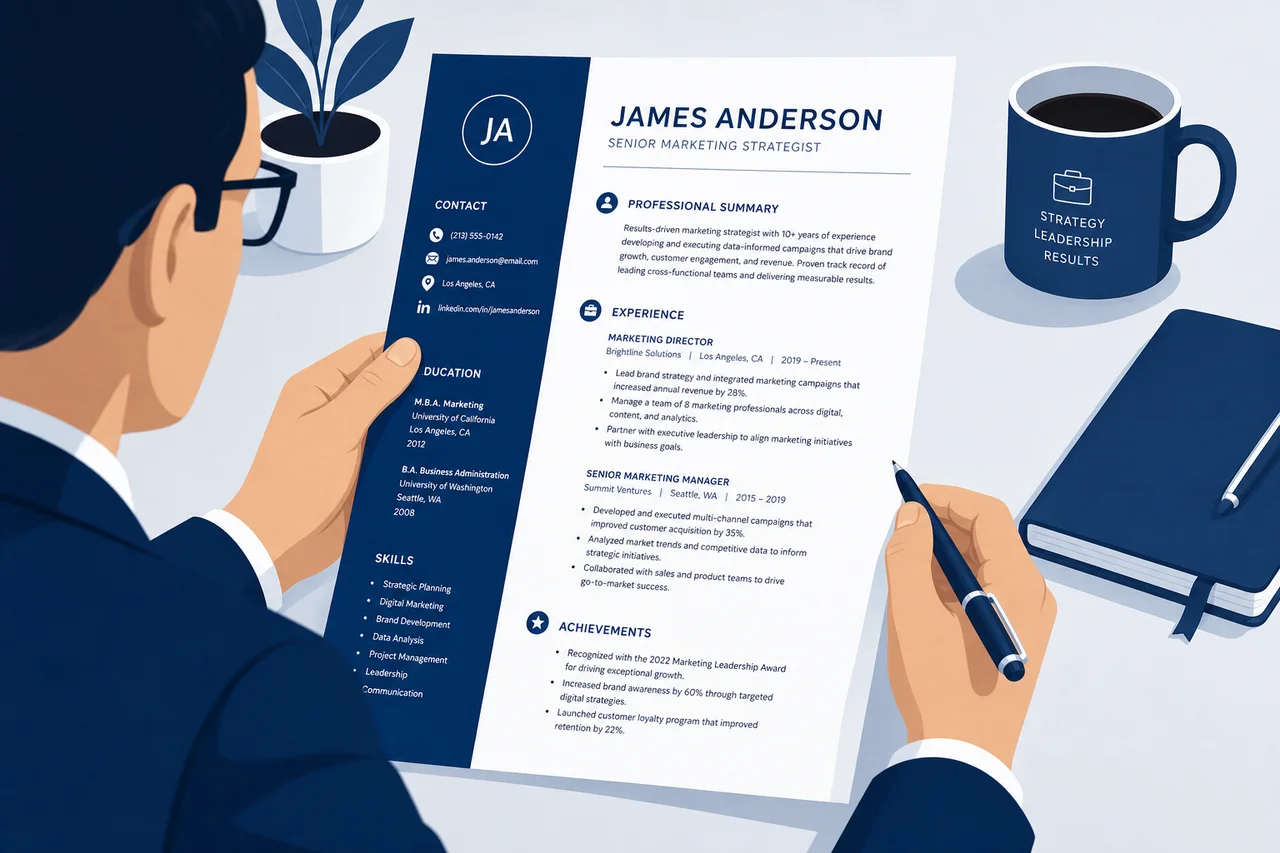
Executive resumes use refined formatting: conservative fonts, strategic use of white space, and subtle design elements that convey sophistication without distraction. Overly creative designs undermine executive credibility.
Professional resume designers who specialize in executive documents understand the visual language that C-suite recruiters expect. The investment in professional design signals the attention to quality that executive roles demand.
Working With Executive Recruiters and Search Firms
Executive search firms evaluate resumes differently than direct employer submissions. They look for client-ready candidates whose materials can be presented to boards and hiring committees with minimal revision.
Tailor your resume for recruiter audiences by emphasizing the breadth and scale of your experience. Recruiters need to quickly match your profile to client requirements across multiple searches simultaneously.
How Often Should Executives Update Their Resumes?
Update quarterly with significant achievements, board appointments, and organizational milestones even when you are not actively searching. Executive opportunities arise through relationships and referrals, and having a current resume ready prevents missed timing.
Maintain relationships with executive recruiters by sharing updates proactively. A brief annual email updating your recruiter contacts on career developments keeps you visible for emerging opportunities.
Should executives include certifications on their resumes?
How important is a LinkedIn profile for executive job searches?
Do executive resumes need cover letters?
Should executives hire professional resume writers?
How do executives handle confidential job searches?
Executive resumes serve a different purpose than the documents that launched your career. They position you as a strategic leader whose track record of organizational impact makes you the natural choice for the next leadership challenge.