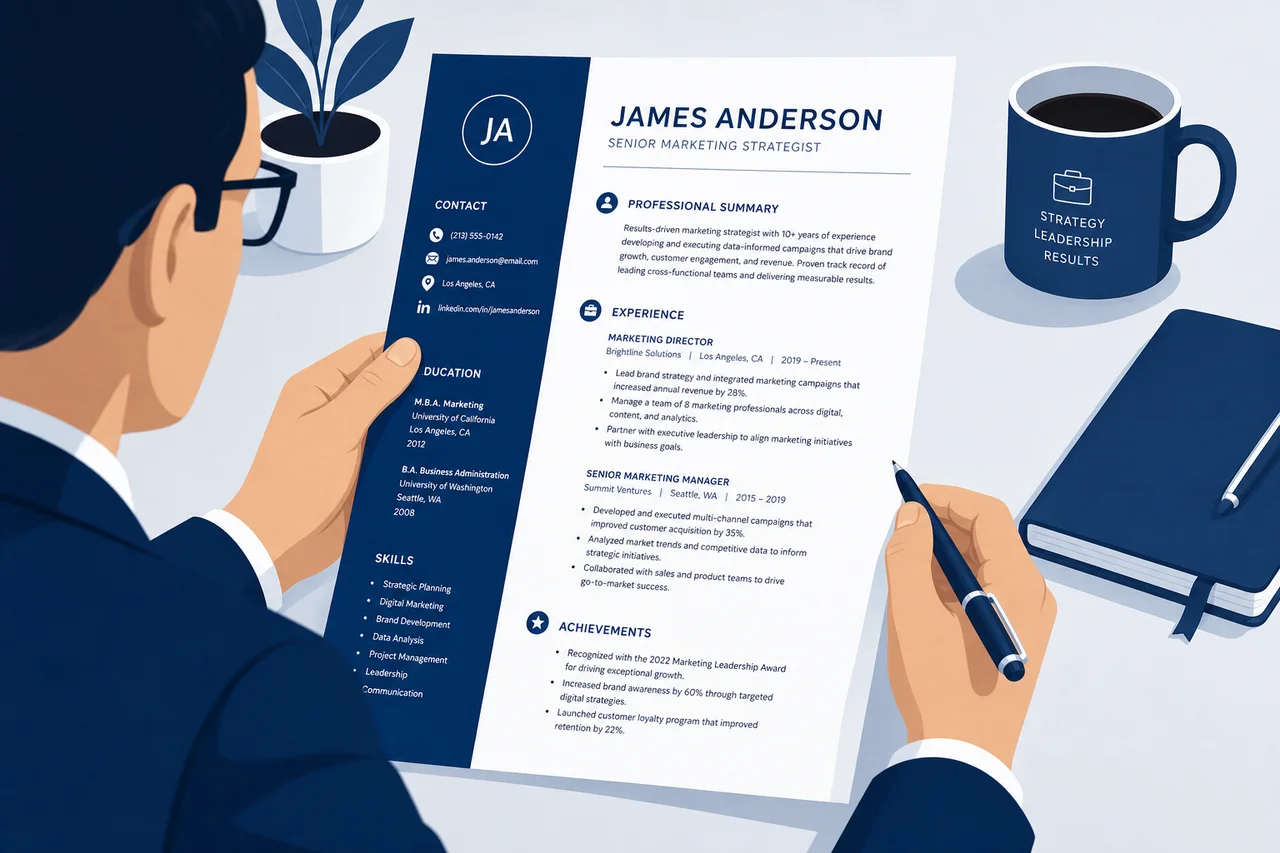
Resume Format Guide: Choose the Right Layout for You
Resume format guide comparing chronological, functional, and combination layouts. Choose the right format for your experience.
Anúncios
Resume format determines how recruiters process your qualifications in the six to seven seconds they spend on initial review. The wrong format buries your strengths while the right one highlights them immediately.
Three main formats serve different career situations. Understanding when each one works and when it backfires prevents the formatting mistakes that cost otherwise qualified candidates their interviews.
Chronological Format: When and Why It Works Best
Anúncios
The chronological format lists work experience from most recent to oldest with dates prominently displayed. It works best for candidates with steady career progression in a single field because it showcases upward mobility that recruiters can trace at a glance.
This format is the safest choice for most job seekers because recruiters expect it and applicant tracking systems parse it most accurately. When in doubt, default to chronological.
How Does the Functional Format Differ?
Anúncios
Functional resumes organize information by skill category rather than employment timeline. They minimize dates and employer details while emphasizing capabilities. Career changers, returning workers, and candidates with gaps gravitate toward this format.
The drawback is significant: many recruiters distrust functional resumes because they assume the format conceals employment problems. Use it only when the chronological alternative would create more questions than the format itself.
When Should You Use a Combination Resume?
Combination resumes lead with a skills summary followed by reverse-chronological work history. This hybrid captures the strengths of both formats: skill emphasis for relevance and timeline clarity for credibility.
Most experienced professionals benefit from the combination format because it lets you front-load relevant qualifications while providing the employment history context that recruiters require for due diligence.
Does Resume Length Actually Matter?
One page for early career professionals with under ten years of experience. Two pages for experienced professionals with extensive relevant history. Three pages only for executives or academics with publication and presentation lists.
Every line must justify its presence. A tight one-page resume outperforms a padded two-page one because density signals confidence in the relevance of included material.
How to Structure Your Contact Information
Place your name, phone, email, LinkedIn URL, and city/state at the top. Exclude full street address for privacy. Include portfolio URLs if relevant to the role.
Make contact information scannable. Recruiters who want to reach you should find your phone number within two seconds of looking at the page.
The Professional Summary Section Done Right
A three to four sentence summary that matches your strongest qualifications to the specific role replaces the outdated objective statement. Customize this section for each application using language from the job posting.
The summary is your elevator pitch in print. It should answer who you are professionally, what you specialize in, and what value you deliver in terms the target employer immediately understands.
Formatting Work Experience for Maximum Impact
List company name, title, dates, and three to five bullet points per role. Start each bullet with an action verb followed by a quantified result. Managed, developed, reduced, increased, and delivered open strong bullet points.
Remove duties-focused language. Responsible for managing a team tells the reader nothing about your effectiveness. Led a team of eight that increased quarterly output by 23 percent tells them everything.
Education Section Placement and Content
Recent graduates place education before experience. Everyone else places it after. Include degree, institution, graduation year, and relevant honors. Omit GPA after two years of professional experience unless it was exceptional.
Certifications, relevant coursework, and professional development belong in a separate section or within education depending on their significance to the target role.
Skills Section Strategy for ATS and Humans
List both technical and soft skills using terminology from target job postings. ATS scans this section for keyword matches while human readers use it to quickly assess qualification breadth.
Group skills into categories for easy scanning. Technical Skills, Languages, Tools, and Certifications as separate subsections help readers locate specific qualifications instantly.
How Should You Handle Multiple Career Directions?
Maintain a master resume with all experience and create targeted versions for different role types. A marketing professional applying to both content strategy and brand management roles needs two versions emphasizing different accomplishments.
Each version should feel purpose-built for the specific role rather than a generic document sent to multiple opportunities. Customization time directly correlates with interview invitation rates.
Visual Design Elements That Help Versus Hurt
Clean formatting with consistent fonts, adequate white space, and logical section separation aids readability. Avoid graphics, photos, colored backgrounds, and unconventional layouts that confuse ATS parsing and distract human readers.
Use bold for section headers and company names. Use bullets for achievements. Use standard margins between 0.5 and 1 inch. These simple design choices create professional documents that function across all review contexts.
- Save your resume as both Word document and PDF formats for different submission requirements
- Name the file with your full name and the word resume for easy recruiter filing
- Proofread by reading backward sentence by sentence to catch errors your brain autocorrects
- Ask someone unfamiliar with your work to review for clarity and impact
- Update your resume quarterly even when you are not job searching to capture fresh accomplishments
Should you use resume templates?
How far back should work history go?
Do creative resumes work in non-creative industries?
Should you include volunteer work on your resume?
Is it worth hiring a professional resume writer?
Your resume format is the frame around your professional portrait. The right frame enhances the picture while the wrong one distracts from it. Choose the format that makes your strongest qualifications impossible to miss.